Source atm pos touch screen monitor for Retail, Dining, and Banking
Compare 18 atm pos touch screen monitor options featuring Intel CPUs, Windows systems, and various certifications like CE and FCC. Buyers can evaluate models with thermal printers, capacitive screens, and network management capabilities for retail, dining, and banking applications.
Key considerations
Products List




Comprehensive Sourcing Guide
Strategic Sourcing Guide for ATM POS Touch Screen Monitor Solutions
The global demand for integrated Point of Sale (POS) systems with touch screen capabilities continues to rise, driven by the need for efficient transaction processing in retail, hospitality, and financial sectors. When sourcing an ATM POS touch screen monitor, buyers must navigate a complex landscape of technical specifications, regulatory compliance, and supply chain logistics. This guide provides a structured approach to evaluating potential suppliers and products, ensuring that procurement decisions are grounded in verified data and industry best practices. The focus remains on fixed and handheld units that integrate touch interfaces, network management, and payment processing capabilities, with specific attention to the models and attributes observed in the current market.
Technical Architecture and Core Specifications
Understanding the underlying hardware architecture is the first step in selecting a viable POS unit. The market offers a variety of configurations, ranging from fixed countertop units to handheld devices. A critical observation in the current product landscape is the prevalence of Intel-based processing units, which provide robust performance for Windows-based operating systems. These systems are often paired with specific memory configurations, such as 2GB of RAM and 8GB of Flash Memory, to ensure smooth multitasking and rapid application loading.
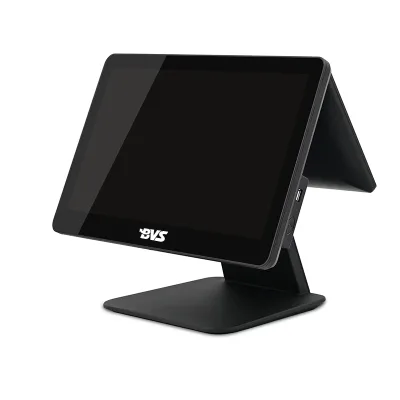
Display technology varies significantly across different models. Some units feature a 15.6-inch display with a resolution of 1920 x 1080 pixels, offering high-definition clarity for detailed transaction screens. In contrast, other models may operate with a maximum resolution of 1024 x 768 pixels, which is sufficient for standard receipt printing and basic menu navigation. The touch interface is predominantly capacitive, providing a responsive and intuitive user experience. Buyers should verify whether the touch panel supports multi-touch gestures or requires single-point input, as this impacts the ergonomics of the device during high-volume transactions.
Connectivity is another vital technical consideration. Modern POS units typically support 802.11b/G/N WiFi standards operating at 2.4GHz, allowing for flexible wireless network integration. Bluetooth 4.2 is also commonly integrated to facilitate connections with peripheral devices such as card readers or mobile payment terminals. The distinction between models with built-in thermal printers and those sold without printers is essential for budget planning and space allocation. For instance, specific models are designated as "POS for Consuming" or "POS for Transfering," indicating their intended functional scope within a business workflow.
Compliance and Certification Verification
Regulatory compliance is non-negotiable when sourcing financial and retail hardware. Products intended for international markets must adhere to strict safety and electromagnetic compatibility standards. The observed product data indicates that many units carry CE and FCC certifications, which are mandatory for selling electronic equipment in the European Union and the United States, respectively. These certifications ensure that the devices do not emit excessive electromagnetic interference and meet safety requirements for electrical components.
For payment processing applications, specific financial certifications are required. The presence of EMV certification is a critical indicator of a device's ability to handle chip card transactions securely. Some models in the market are listed with EMV, CE, and FCC certifications, suggesting a higher level of readiness for complex payment environments. Buyers must verify that the specific unit they intend to purchase holds the necessary certifications for their target region. Relying on general background information about RoHS compliance is insufficient; the specific certification status of the model must be confirmed through official documentation or the supplier's compliance database.
Furthermore, the physical construction of the device often relates to its durability standards. While some units are described with a standard weight of 5.5KG, others may be constructed from metal to enhance longevity in high-traffic environments. The packaging standards, such as "Paper-Box Packaging" or "Pearl Cotton Carton," also play a role in protecting the device during transit, but the internal build quality is the primary determinant of long-term reliability.
Cost Drivers and Pricing Dynamics
The pricing of ATM POS touch screen monitors is influenced by a combination of hardware specifications, certification levels, and customization options. The observed price range in the market spans from 99 to 456 USD, reflecting the diversity of configurations available. Lower-priced units typically feature basic specifications, such as lower resolution displays, standard memory configurations, and the absence of built-in printers. Conversely, higher-priced models often include advanced features like high-resolution touch screens, integrated thermal printers, and comprehensive network management capabilities.
Customization is a significant cost driver. Many suppliers offer customization services, allowing buyers to tailor the hardware or software to specific operational needs. This flexibility can increase the unit cost but may reduce long-term integration expenses. The Minimum Order Quantity (MOQ) also impacts the effective cost per unit. The market shows an MOQ range from 1 to 500 units, providing flexibility for small businesses while offering economies of scale for larger enterprises. Buyers should negotiate based on their volume requirements, as larger orders often unlock better pricing tiers.
Payment methods and trade terms further influence the total cost of ownership. While cash payments are listed as an option, modern transactions often involve mobile payment methods or bank transfers. Trade terms such as EXW (Ex Works) and FOB (Free on Board) dictate who bears the shipping and insurance costs. Understanding these terms is crucial for accurate budgeting, as the listed price may not include logistics expenses.
Typical Applications and Functional Use Cases
The versatility of POS touch screen monitors allows them to serve a wide array of applications. The primary functional categories observed include "POS for Consuming" and "POS for Transfering." These distinctions guide the selection of hardware based on the specific business model. For example, a restaurant or café might prioritize a unit with a built-in thermal printer and a large touch screen for quick order entry and receipt generation. In contrast, a bank or financial institution might require a handheld device with non-contact IC card support for mobile transaction processing.
Card type compatibility is another key factor in application suitability. Some units support Magcard technology, while others are designed for Non-Contact IC Cards. The choice between these depends on the local payment infrastructure and the types of cards the business expects to process. Additionally, the distinction between fixed and handheld types dictates the deployment strategy. Fixed units are ideal for stationary checkout counters, whereas handheld devices offer mobility for tableside service or on-the-go transactions.
Network management capabilities are essential for businesses with multiple terminals. Units that support network management allow for centralized monitoring and control, ensuring that all POS devices are synchronized and up-to-date. This feature is particularly valuable for chain stores or large enterprises where consistency across locations is critical.
Supplier Evaluation and Selection Criteria
Selecting the right supplier requires a rigorous evaluation process that goes beyond price comparisons. Buyers should prioritize suppliers who provide transparent information about their product models, such as the CJ-T660D, CJ-S800, CJ-S610+, ED170, ED150, HKC1502, and GT-0290. These specific model numbers serve as identifiers for verifying the exact specifications and capabilities of the hardware.
Geographic origin is another important factor. The majority of the observed products originate from China, with specific manufacturing hubs noted in Shenzhen and Shen Zhen. While this indicates a concentration of supply, buyers should verify the specific factory location to assess logistics efficiency and potential trade barriers. The lead time for these products typically ranges from 7 to 25 working days, depending on the order quantity. Buyers must factor this into their inventory planning to avoid stockouts.
Quality control processes are a strong indicator of supplier reliability. Suppliers that commit to "100% Inspection Before Shipment" demonstrate a higher standard of quality assurance. This practice reduces the risk of receiving defective units and minimizes the need for returns or replacements. Additionally, the packaging standards, such as the use of "Plastic Film+Harden Carton Box+Plywood Case," suggest a commitment to protecting the product during shipping, which is vital for maintaining the integrity of sensitive electronic components.
Quality Control and Long-Term Procurement Strategy
Ensuring the long-term reliability of POS systems requires a proactive approach to quality control and maintenance. The observed standard of "100% Inspection Before Shipment" is a baseline expectation, but buyers should also inquire about the supplier's warranty policies and after-sales support. Regular firmware updates and software compatibility checks are necessary to maintain security and functionality over time.
The physical durability of the device is also a long-term consideration. Units with metal construction or specific weight standards (e.g., 5.5KG) may offer better resistance to wear and tear in high-traffic environments. Buyers should assess the environmental conditions where the device will be deployed and select a unit that can withstand those conditions.
Finally, the procurement strategy should include a plan for scalability. As the business grows, the need for additional units or upgraded models may arise. Selecting a supplier that offers a consistent product line and supports future upgrades can simplify the expansion process. By focusing on verified specifications, compliance certifications, and robust quality control measures, buyers can secure a reliable supply of ATM POS touch screen monitors that meet their operational needs.
Comparative Analysis of Key Product Attributes
To facilitate informed decision-making, the following table summarizes the key attributes observed across different product models. This comparison highlights the variations in specifications, certifications, and functional types that buyers should consider.
| Attribute | Model Group A (Fixed/Standard) | Model Group B (Handheld/Advanced) | Model Group C (Specialized) |
|---|---|---|---|
| CPU | Intel | Intel | Intel |
| Display | 1024 x 768 Max | 15.6 Inches, 1920 x 1080 | Variable |
| Touch Panel | Touch Screen | Capacitive Touch Screen | Touch Screen |
| Printer | Without Printer | Built-in High Speed Thermal | Thermal |
| Card Type | Magcard | Non-Contact IC Card | Magcard |
| Certification | CE, FCC | EMV, CE, FCC | EMV, CE |
| Type | Fixed | Hand Held | Fixed |
| Function | POS for Consuming | POS for Consuming, Transfering | POS for Consuming |
| Memory | 2G | 2G | 2G |
| Flash | 8G | 8G | 8G |
| WiFi | 802.11b/G/N 2.4GHz | 802.11b/G/N 2.4GHz | 802.11b/G/N 2.4GHz |
| Bluetooth | Bluetooth 4.2 | Bluetooth 4.2 | Bluetooth 4.2 |
| Origin | China | Shen Zhen | Shenzhen, China |
| Lead Time | 7-25 Working Days | 7-25 Working Days | 7-25 Working Days |
This table illustrates that while core specifications like CPU, memory, and connectivity are often consistent across models, the differentiating factors lie in the display resolution, printer integration, and card type support. Buyers should align these attributes with their specific operational requirements to ensure optimal performance. By carefully evaluating these factors, procurement teams can make data-driven decisions that enhance efficiency and reliability in their POS infrastructure.
FAQs
What CPU and operating system do these POS units use?
Most units utilize Intel CPUs running the Windows operating system. This configuration supports robust multitasking for retail and hospitality applications while ensuring compatibility with standard payment software.
Which certifications are required for international payment processing?
Many models carry CE, FCC, and EMV certifications for global compliance. EMV is specifically critical for secure chip card transactions, while CE and FCC ensure safety and electromagnetic compatibility in target regions.
Can I find handheld POS devices with built-in thermal printers?
Yes, handheld models like the HKC1502 feature built-in high-speed thermal printers. These units support non-contact IC cards and are designed for mobile transaction processing in high-traffic environments.
What is the typical lead time for custom orders?
Lead times generally range from 7 to 25 working days depending on order quantity. Buyers should plan inventory accordingly as production schedules vary based on the specific volume requested by the client.
How does the display resolution vary across different models?
Display options include 15.6-inch screens with 1920x1080 resolution or units with 1024x768 maximum resolution. Capacitive touch panels are standard, offering responsive input for both fixed and handheld configurations.
Which payment methods and card types are supported?
Devices support Magcard and Non-Contact IC Card types with mobile payment capabilities. Some units function specifically for consuming or transferring funds, ensuring versatility across different business operational workflows.